To shine a light on the transformative power of tuition assistance, Alumni Council member Ted Alcorn ’01 is telling the stories of alumni who were grateful recipients during their Academy years.
By Ted Alcorn ’01
 Ian Bourland ’00 was in fifth grade when his world fell apart.
Up until then, he’d led, in his words, a “beautiful North Valley idyllic childhood,” with a house in a quiet neighborhood near parks where he played soccer, the pizzeria he favored for a quick slice, and beloved exhibits of the Museum of Natural History and Science.
He was on the cusp of middle school when his dad, the family’s sole breadwinner, abruptly left Albuquerque for a hardscrabble town in southwestern Wyoming. Over the next two years, Ian’s parents’ marriage unraveled, leaving his mom raising two young children and trying to rebuild her own life from the ground up.
The trio were living out of suitcases, Ian recalled, including a period with extended family in Washington State. Even after they found stable housing, finances remained precarious.

The Academy turned out to be a lifeline of sorts. Ian, who had attended the school’s summer camp and had always wanted to be a full-time student, applied. Friends chipped in to host him so he could return to Albuquerque and interview. He was one of just a handful of students accepted into the 8th grade and was offered full tuition assistance.
“My getting into the Academy was the reason we came back” to New Mexico, he said. If not for that decision, “I don’t know what would have happened to me.”
Even with financial aid, attending the school was a stretch. His mom was heading back to school, too, on top of working two jobs. Required books sometimes stressed the family budget.
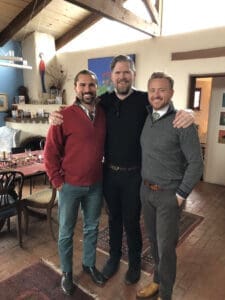
But other lifelines kept dropping into the water. He found his way onto the debate team, where coaches Kevin Hall and Randy McCutcheon contrived to bring him to tournaments and training camps his family could not afford. His French teacher, Barbara Reeback, pointed him toward a program that would put him up in France for a summer, to better his language skills.
Those experiences “radically shaped who I am and completely changed my life,” Ian said. He hadn’t asked for them, hadn’t known what to ask for. “Someone was just looking out for me.”
With hindsight, he felt like faculty treated him and other students not as kids to be managed but as precocious adults, even when they tested boundaries. He dyed his hair, got caught smoking cigarettes up by the tennis courts, and wore offensive punk shirts. It doubtless annoyed administrators, but they didn’t throw him out. “There was just a sense that we were kind of a big family.”
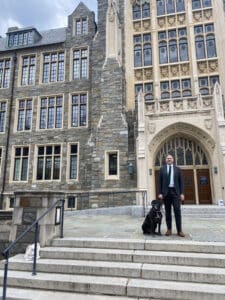
That’s something he recognizes at Georgetown University, where he now chairs the department of art and art history. In that role, he’s pushed for a curriculum that takes in a more global sweep and is more attentive to power.
As a Jesuit institution, the school emphasizes cura personalis — care for the whole person — and for Ian, that is a continuation of what he experienced at the Academy. “It was a place with a sense of holistic education,” he said. “Care for your city, care for ecology, care for the people around you — be an ethical actor in the world.”
The hard times his family experienced are with him still, too. “It increased my sense of how provisional and contingent everything is, but that reminds me to be grateful,” he said, and “to look out for the next generation and my students and my friends in the same way.”
