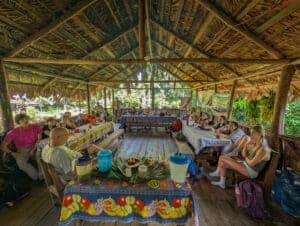
 When 22 Albuquerque Academy students traveled to Costa Rica during spring break, it was far from being a vacation. The advanced life science students lived with the Bribri, an Indigenous people in eastern Costa Rica and northern Panama, where they made meaningful contributions and took home important life lessons.
Having experienced E. coli outbreaks due to having cattle cross their land, the Bribri need to establish a new well site, which requires approval from the local water authority. Such a process generally entails an extensive study; working with the Academy is a more cost-effective way to achieve their goals. Our student scientists sampled water from various sites in the community, such as individual homes and the community kitchen, for E. coli and are writing up their findings in a report for the Bribri; they also trained their hosts to test for E. coli and other coliform bacteria.
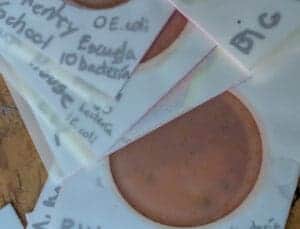 The students also sampled water from two rivers bordering the Bribri and a section of the ocean located near an industrialized area — samples they’re currently testing in classroom labs for the presence of microplastics.
“The night we presented our research to the Bribri was so heartfelt and special to see their community come together to hear good news about their water sources,” said Corrine Dracup ’26. “Just watching the looks on all of their faces and all the smiles they had while looking at the test results. It really highlighted the impact that we were making while being on this trip and the way we were giving back to the community that was hosting us.”
The Bribri grow much of their food, medicine, and materials used for housing, so the Academy students also helped the community refine their agroforestry system by including sustainable forestry practices, such as low-impact farming and crop rotation.
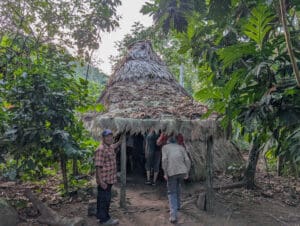 “It was a brutal trip in some ways,” said science teacher Miranda Fleig, including an extra five-mile hike with all of their belongings at the end of a very long day of travel because the river was too low to canoe to their final destination. As guests in the Bribri village, they slept in open huts under mosquito nets and often shared cold showers with giant grasshoppers and spiders.
“Going into this experience, I assumed I was going to feel sorry for the Bribri because they didn’t have things I initially viewed as luxuries,” said Addison Scrivner ’26. “I left with a newfound sense of perspective that luxuries aren’t always a nice car and a nice house, but the kindness and hospitality shown to you. I left not feeling sorry for the Bribri but knowing that happiness exists in all people and places, even when typical luxuries aren’t present.”
The trip was work, but it was also holistic. While mornings meant physical labor like trail maintenance and tree planting, after a lunch break, the students had lessons in culture, religion, and language. Evenings were for committee meetings and community building.
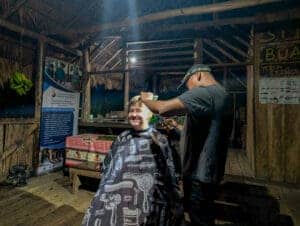 “One experience that really stuck out to me was getting my hair cut with the Bribri,” said Zac Fernandez ’25. “It was so impactful because it wasn’t a planned event on the schedule, but something that we made happen. I made friends on the trip with people from school, and we then made friends with the Bribri. We worked through language barriers to learn about each other and eventually ended up scheduling a haircut. It was just such a surreal experience of getting a haircut in the middle of the jungle, in a hut under a headlamp with someone I had just met.”
The trip was run through Latin American Service Expeditions, a sustainability organization that came to the attention of the science department during the 2023-24 school year. Miranda and fellow science department member Andres Lucero participated in related professional development last summer, and then they, along with science faculty member Joelle Shaw, began planning for spring break. With one trip under their belts, they are looking to get more teachers on board to make it a more cross-curricular experience.
